


Towards Organic with Artificial Intelligence
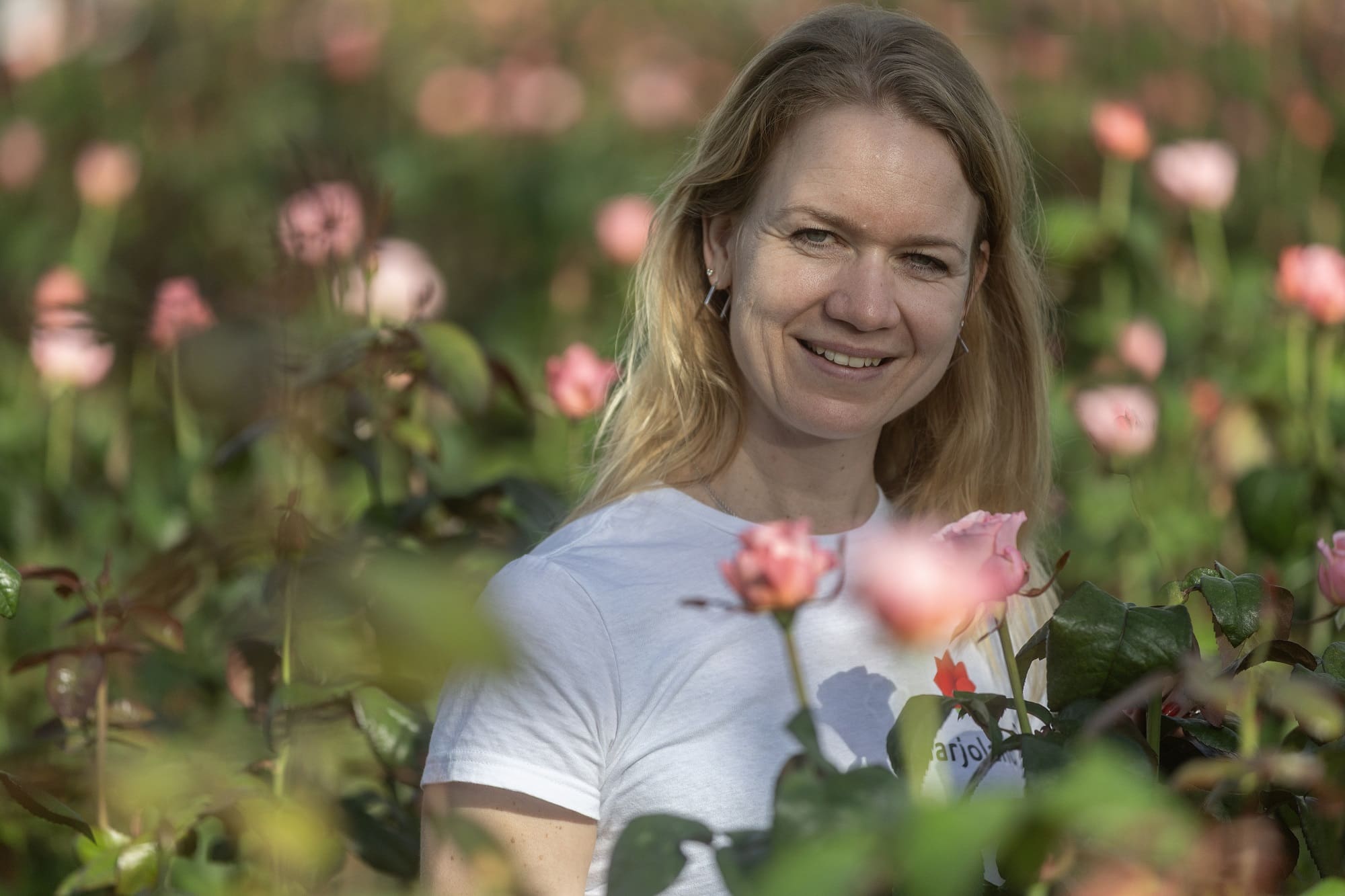
Marjoland, with 20 hectares of greenhouses, is the largest rose grower in Europe. In addition to leading in assortment and quality, the company is also at the forefront of sustainability.
The story began in 1985, when Joop van den Nouweland and his Polish wife, Mariola, decided to replace cucumber cultivation with rose growing. They named the company Marjoland, a combination of their first names. More than forty years later, their son, Daniël van den Nouweland, manages the day-to-day operations, while their daughter, Angelien, runs the company's own employment agency, Marjo Job.
Marjoland employs 250 people, primarily from Poland and Ukraine. Each year, the company supplies around 70 million roses to customers in the Netherlands (15%) and neighbouring countries. Its roses are sold through the auction clocks of Plantion, Royal FloraHolland, and Veiling Rhein-Maas.
Extensive Assortment
Around two-thirds of Marjoland's production consists of Red Naomi roses. In addition, the company grows ten other varieties in white, pink, purple, yellow, and orange.
"This allows us to offer florists the most complete possible range of large-flowered roses," says Commercial Manager Leonie Plasman. "We continuously develop our assortment by working closely with breeders and trialling new varieties on 2,500 square metres of greenhouse space. It's always exciting because you never know exactly how a new variety will perform, but it enables us to keep offering something distinctive."
Predatory Mites and Geckos
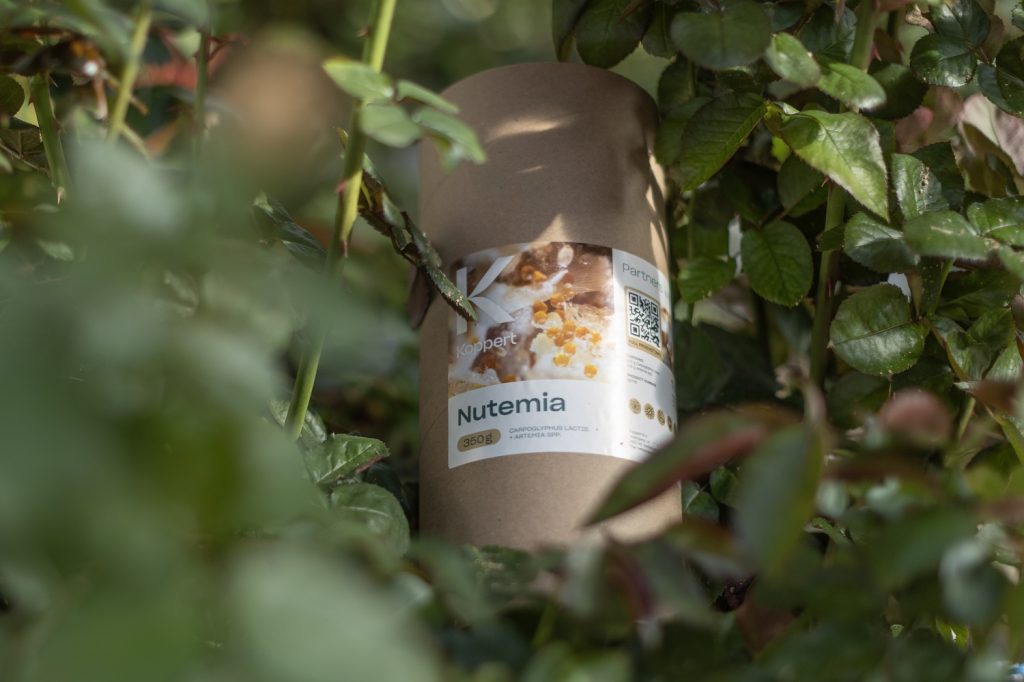
Marjoland is committed to standing out in sustainability as well. In partnership with Koppert, a specialist in biological crop protection, the company has developed an extensive programme to control pests naturally.
"Every week, Koppert specialists visit our greenhouses to help maintain a healthy ecological balance," says Leonie Plasman. "For example, we use predatory mites to control thrips and spider mites. To ensure there are always enough beneficial insects available, we maintain a stable base population."
To keep soil-dwelling insects under control, geckos have been introduced into the greenhouses. The rose plants can also be affected by scale insects, mealybugs, soft scale, aphids, whiteflies, and powdery mildew. Employees can quickly identify each pest using visual guides displayed throughout the greenhouses, while specialists regularly inspect the crop for early signs of infestation.
Powdery mildew is controlled by autonomous robots equipped with UV-C lamps that move through the greenhouse rows, providing an effective chemical-free treatment.
Applying AI
To detect crop issues at the earliest possible stage, Marjoland relies on more than just the expertise of its employees. At the end of each of the four processing lines, cameras capture fourteen images of every single rose. Using artificial intelligence (AI), each flower is then scanned for signs of damage or disease.
Because the system identifies exactly which greenhouse section an affected rose comes from, any pest or disease can be tackled with exceptional precision. If chemical crop protection is ever required, it can be applied only where needed, keeping its use to an absolute minimum.
"This is a great example of how AI can support sustainable cultivation," says Leonie Plasman. "We want to keep developing in this direction. This innovation is a major step towards our ambition of becoming a fully organic rose grower."
Multicoloured LED Lighting
Marjoland has also made significant progress in energy efficiency. Its greenhouses are illuminated with multicoloured LED lighting, precisely tuned to provide the optimal light spectrum for rose growth. The lighting is dimmable and automatically adjusts to the amount of natural daylight available. Energy screens help retain heat, reducing overall energy consumption.
The pure CO₂ required for plant growth is supplied through a pipeline network by OCAP from the Port of Rotterdam. Marjoland also generates its own electricity using a combined heat and power (CHP) system.
"These measures put us ahead of the sustainability targets set by the European Union for 2030," says Leonie Plasman.
Rainwater is collected and reused, while excess irrigation water is purified on-site and recirculated within the cultivation system. As a result, no wastewater needs to be discharged into surface water, making the production process even more sustainable.
Hand in Hand
For Marjoland, the goal is clear: to create the greatest possible ornamental value while using as few resources as possible.
"We want to do what's right for the world," says Leonie Plasman. "At the same time, it's good for our business because it makes us more efficient. Sustainability and economic success go hand in hand."